
We turned a wild seaweedinto a crop.
Algal Tech has developed a disruptive aeroponic technology to produce a new, delicious and nutritious sea vegetable — Aonori — as an ingredient, using salt water and non-arable land in a controlled-environment system.
Our mission is to make highly nutritious fresh and dried sea vegetables, with a mild umami taste, available to mass markets as a key new super ingredient.
- Patent-pending applications and trade secrets

- Vegetable protein
- 25%
- Dietary fiber
- 40%
- Minerals
- 24%
Dry weight
GrowingControlled-environment aeroponic system
Grown in air, not in soil.
Patent-pending aeroponic system
Culture period
12months a year
Aeroponics is the process of growing plants — in this case marine — in an air environment, without soil, with a direct supply of essential nutrients through a fertilized seawater spray, which also provides the CO₂ they need to grow.
Through a scientific understanding of algal physiology, and extensive scientific and engineering collaboration, Algal Tech has gained significant knowledge and advantages over two existing approaches: the harvest of wild seaweeds, and aquatic culture — algae floating in water, at sea or in inland ponds.
- Control
- Greater control of the nutritional properties of the algae.
- Consistency
- Greater consistency in quality and nutritional composition.
- Volume
- Reliable production volumes throughout the culture period.
- Cleanliness
- Growing under greenhouse cover prevents contamination by insects, bacteria and dust.
- Water
- Grown using pristine cold water from the Pacific Ocean.
- Standards
- Meets international sustainability standards.
Does not containBy design
- Genetically modified organisms
- Processing additives, preservatives, dyes and flavorings
- Monosodium glutamate
- Pesticides, herbicides, insecticides and fungicides
It does not pollute the environment, and it conserves fresh water and fertile agricultural land.
Composition
What 100 grams contains.
Protein, fiber and minerals in a single biomass, in proportions that are set by the culture rather than inherited from a season.
All figures dry weightLaboratory panel
- Vegetable protein
- 25%
- Biologically complete amino-acid profile, with all essential amino acids present.
- Dietary fiber
- 40%
- ≈25% soluble · ≈15% insoluble.
- Minerals
- 24%
- Highly bioavailable, marine-derived.
- Years of R&D
- 20+
- Multidisciplinary technology development.
Minerals
Per 100 g dry weight
Each mineral is set against the food usually prescribed for it — 100 g dry against 100 g as eaten. A density comparison, not a serving. Aonori is dried, so part of every ratio is simply the absence of water.
- Magnesium21,000 mg/100 g
- 40×pumpkin seeds
- Calcium1,900 mg/100 g
- 15×milk
- Potassium1,250 mg/100 g
- 3.5×bananas
- Iron210 mg/100 g
- 78×spinach
Vitamins
- Provitamin A
- B12
- C
- E
- K
- Folic acid
Including B12, which plant sources rarely supply.
Pigments
- Lutein
- ≈80% of the lipid fraction
- Antioxidant. Protects the eyes and skin, and is associated with prevention of age-related vision loss.
- Beta-carotene
- Carotenoid
- Antioxidant and a precursor to vitamin A.
- Chlorophyll
- Pigment
- Associated with detoxification and reduced odor.
BenefitsA functional food
Nutrition, and then some.
A functional food gives health benefits beyond the provision of basic nutrients. These are the properties reported for Aonori and for its constituent compounds.
- 01
Diabetes
Diets high in soluble fiber give better outcomes for people with diabetes, by reducing the glycemic index of the foods it is formulated into. Aonori is also a good source of magnesium.
- 02
Cholesterol
Soluble fiber can reduce serum cholesterol. Ulvan, the soluble fiber in Aonori, is among the most effective polysaccharides studied for cholesterol reduction, and the alga also carries plant sterols.
- 03
Obesity
Aonori can affect fat accumulation by reducing the glycemic index of the foods it is formulated into, and contributes an anti-obesity effect through its cysteinolic acid content.
- 04
Antiviral
Antiviral effects have been reported, both from the soluble fiber ulvan and from other constituents.
- 05
Anti-inflammatory
Anti-inflammatory effects have been reported, attributed to sterol content.
- 06
Prebiotic
Soluble fiber promotes the abundance of beneficial gut bacteria, giving greater resistance to disease bacteria and a general improvement in digestive function.
Dietary fiber intake
- Recommended
- 25–35 g/day
- US adult average
- 13–20 g/day
The minimum daily dietary fiber intake is 25 to 35 grams in healthy adults. The current average intake among adults in the United States is 13 to 20 grams a day.
UsesSuggestions for use
A new ingredient, offered B2B.
Our model is to offer our products B2B as high-value new ingredients for existing products and for new flavor and line extensions.
- 01
Nutraceuticals
Dietary supplements.
- 02
Functional foods
Nutrition bars, juices and smoothies.
- 03
Alternative protein
Plant-protein foods.
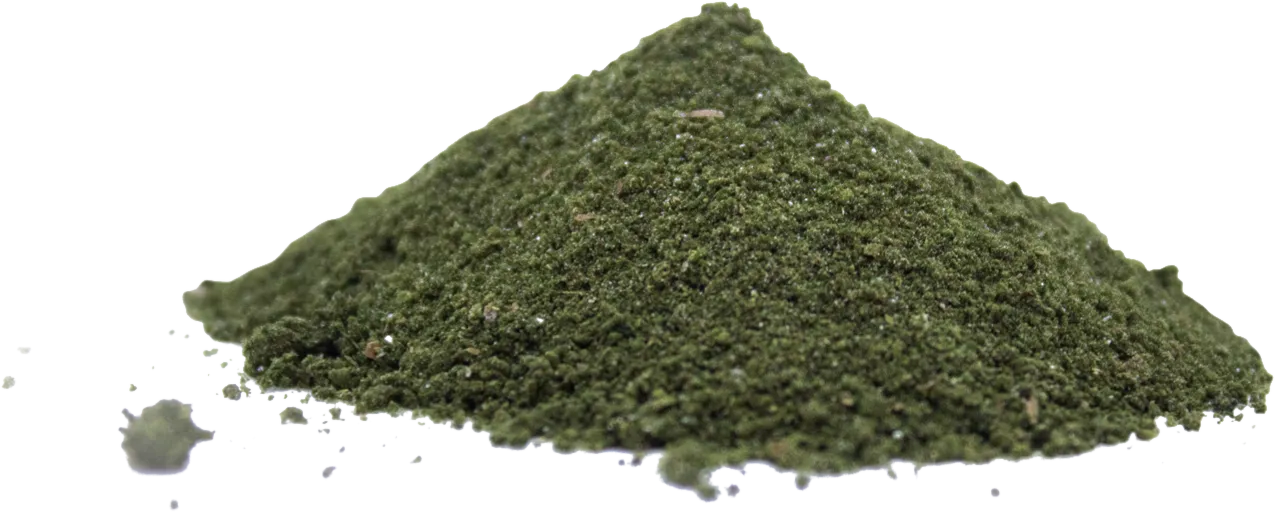
SpecimenAs supplied
Dried and milled Aonori. A desaturated marine green — not the deep matcha of a pigment-corrected powder.
TeamManagement
Who built it.
Leadership04
- 01
Armando León
Co-founder & CEO
Corporate and startup international work. 22 years of experience in the domestication and co-cultivation of sea algae.

- 02
Benjamín Moll
Co-founder & CTO
Over 40 years of experience in biotechnology. An inventor with 10 patents related to photosynthesis of algae and seaweed farming technology.

- 03
Javier Echevarría
Co-founder & CFO
12 years' experience in finance and M&A deals across various industries, among them agribusiness.

- 04
José García
Co-founder & CMO
20 years of experience in sales and business development of new products in the food industry.

ContactMéxico
Talk to us.
Aonori is offered B2B as a new ingredient. Write to us about supply, samples or a formulation you are working on, and we will come back to you.
Write to
info@algal.techInquiries answered in English or SpanishPacific time
Write to Algal Tech